19.8.24

21.11.09
The Beauties of Earth

As the Sun shines
throughout the day
clouds gleaming and moving slowly
amidst the blue skies in the horizon
watching birds freely flying everywhere
the moon gives the Sun's light at night
and countless stars shining so brightly
amidst the dark skies filled with hope
but silently waiting for the Truth be told
then
in our awe to look up in admiration
is down on Earth so much Life to feel
all the trees, plants, flowers, gardens
and animals as the beauty of creations
as the wonders of Nature that abounds
streams, rivers, lakes, seas
and oceans and shores,
hills, mountains, meadows
everything lives in a beautiful relationship
but more that what our eyes could see
is the people our home is blessed with
that to appreciate all creation is Love
and everflowing to protect Life there is
the same way Earth cares for us people
that with a grateful Heart we also honor
and this gives glory to God
Our Creator
as a creation who is thankful and caring
what makes people greater in meaning
is even if we are different in many ways
in Unity to become one
as a Holy Family
on Earth as Heaven is home
in our Heart!
2.11.09
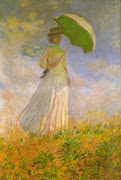
Romanticism !!!
 She walks in beauty, like the night
Of cloudless climes and starry skies;
And all that's best of dark and bright
Meet in her aspect and her eyes:
Thus mellow'd to that tender light
Which heaven to gaudy day denies.
One shade the more, one ray the less,
Had half impair'd the nameless grace
Which waves in every raven tress,
Or softly lightens o'er her face;
Where thoughts serenely sweet express
How pure, how dear their dwelling-place.
And on that cheek, and o'er that brow,
So soft, so calm, yet eloquent,
The smiles that win.
the tints that glow,
But tell of days in goodness spent,
A mind at peace with all below,
A heart whose love is innocent...
Lord Byron

14.10.09
I'M FREE

♫ ♪ I´M FREE ♫ ♪
I'm free,
And freedom tastes of reality,
I'm free- I'm free,
AN' I'm waiting for you to follow me.
If I told you what it takes to reach the highest high,
You'd laugh and say 'nothing's that simple'
But you've been told many times before
Messiahs pointed to the door
And no one had the guts to leave the temple!
I'm free - I'm free
And freedom tastes of reality
I'm free - I'm free
And I'm waiting for you to follow me.
Chorus:
How can we follow?
How can we follow?
I'm free,
And freedom tastes of reality,
I'm free- I'm free,
AN' I'm waiting for you to follow me.
If I told you what it takes to reach the highest high,
You'd laugh and say 'nothing's that simple'
But you've been told many times before
Messiahs pointed to the door
And no one had the guts to leave the temple!
I'm free - I'm free
And freedom tastes of reality
I'm free - I'm free
And I'm waiting for you to follow me.
Chorus:
How can we follow?
How can we follow?
25.5.09
♥ CROCHET IS MY FAVORITE...

**FINISHED PROJECTS**


L O V E
(=_=) MY HOBBIES (=_=)

THIS FILET WHITE BLOUSE IS MY FAVORITE,
AND STARTED TO CROCHET
BLUE ONE USING COTTON YARNS.
CROCHETED A CARDIGAN
AND AT LAST IT IS FINISHED...


I knit and crochet and I have to say that
I prefer crocheting over knitting and
I was thrilled to see mention of it.
To me yarnwork is yarnwork.
think they should be mentioned together.
I like seeing the crochet stuff. I'd like to find more...
NOW I LIKED THIS ONE...


Waiting for your comments (*_^)
11.5.09
Are the Leonids Coming?

♥ GOOD MORNING BLOGGERS...
From Newborns to Adults!
My Angel Face
GRAND-STAR Care Picture
will give you
Gift Kisses.
It's full of items guaranteed to please.
I'd also like to say a "special thanks" to the Mail Groups
for their splendid work.
There's a lot of voluntary work going on all over our friends,
and without the teachers help we would not be able to afford
to do so much in terms of opening up our district to surfers.
I hope you like it!

This beginning will give you Luck,
so you'll have all Happy for Today!
Take care :)
Take care :)
Are the Leonids Coming?
Meteor showers often vary in intensity from year to year, presumably reflecting details of encountering the orbit of the parent comet.
One shower that normally is rather weak, but can at times be strong is the Leonids. As the preceding table indicates, on the average it only gives 10 meteors per hour---not even twice the sporadic rate. However, there is a prediction that the Leonids will grow stronger for the next two years and in 1998 (or perhaps 1999) will produce 10,000 or more per hour at the peak
(when the parent comet is near perihelion).
According to some estimates the rate will be as high as 40 meteors per second (!)
for a short period; a veritable meteor storm...
For more Information, check out :
6.4.09
The Specola Tower - observatory.
 Took some photos for you!!!
The specola tower, which in more recent times was used as an observatory.
The Astronomical Observatory of Padova , Italy.
**From Medieval Castle to astronomical observatory!**
A thousand years of history at the specola.
A lookout tower in the 10th-century; a castle and also a horrid prison
used by the tyrant Ezzelino da Romano from 1242 to 1256;
defensive castle of the Carraresi princes of Padova
from 1375 to 1405; ammunition depot of the Republic of Venice
until 1767, when the observatory was built.
The name "Specola" derives from the Latin specula word,
meaning observatory.
~~~~~~~~~~~~~~~~~~~~~~~~~~
Objectives:
1. To study the history of the meteorological observations performed in Padova in the context of the scientific knowledge of the past three centuries.
1. To study the history of the meteorological observations performed in Padova in the context of the scientific knowledge of the past three centuries.
2. To copy from the original registers, determine all the errors, correct, validate, seek for the lost data and analyse the long meteorological series of Padova (1725-today) which is still unexploited.
3. To analyse the accuracy of the instrumental measurements and evaluate the typical systematic errors.
4. To evidence the apparent climate changes due to changes in measuring methodologies originated by the adoption of new conventions / standards / international recommendations.
 La specola,
 costruita da Ezzelino III da Romano,
nel 1242, come torre di difesa, fu adibita a osservatorio astronomico nel 1767.
Oggi, insieme al castello, è sede della facoltà di Astronomia dell'Università di Padova,
ed stata adibita a museo.
In essa sono conservati gli antichi strumenti utilizzati,
nel 1700 e nel 1800, per le osservazioni astronomiche.
27.3.09
Flying to ITALY...
Next week I'll be in Padova ...

I'll visit Padua and take somephotos there.
I want to see
"La Specola" e la riviera San Benedetto and if possible
The Orto Botanico di Padova,
which is the world's oldest academic botanical garden that is still in its original location. (Officially, the oldest university botanical garden is the Orto botanico di Pisa,
which was founded in 1544; however, that garden was relocated twice
and has only occupied its current,
and now-permanent, location since 1591.)
The garden, affiliated with the University of Padua,
currently covers roughly 22,000 square meters,
and is known for its special collections and historical design.

And hope to visit Venice :) for you all...

Some photos from my daughter's visit...

Being in Venice ?
(Venezia) is one of the world's greatest pedestrian cities. Whether it's sparkling in late spring sunshine or shrouded in winter mist, this city will enchant you in every way. No automotive vehicles are permitted within the city of Venice, which lies offshore on a series of islands.
Everything in the city is transported by boat from the mainland and through the cities many canals to its destination.
The fact that there are no cars, buses, or motorcycles on Venice's narrow streets make it a perfect place to walk around and will enjoy the old city sights.
See you soon ;) ...
9.3.09
Ladies and Gentlemen ...


Gentleman
From Wikipedia, the free encyclopedia
The term gentleman (from Latin gentilis, belonging to a race or
From Wikipedia, the free encyclopedia
The term gentleman (from Latin gentilis, belonging to a race or
"gens", and "man",
cognate with the French word gentilhomme and
in its original and strict signification, denoted a man of good family,
analogous to the Latin generosus
(its invariable translation in English-Latin documents).
In this sense the word equates with the French gentilhomme (nobleman),
which latter term was in Great Britain long confined to the peerage.
The term "gentry" (from the Old French genterise for gentelise)
has much of the social class significance of the French noblesse or
of the German Adel, but without the strict technical requirements
of those traditions (such as quarters of nobility).
This was what the rebels under John Ball in the 14th century meant
Who was then the Gentleman?
John Selden in Titles of Honour (1614),
John Selden in Titles of Honour (1614),
discussing the title "gentleman", speaks of "our English use of it"
as "convertible with nobilis"
(an ambiguous word, like 'noble' meaning elevated either by rank
or by personal qualities)
and describes in connection with it the forms of ennobling in various
European countries.
To a degree, "gentleman" signified a man with an income
To a degree, "gentleman" signified a man with an income
derived from property, a legacy or some other source,
and was thus independently wealthy and did not need to work.
The term was particularly used of those who could not claim nobility
or even the rank of esquire. Widening further,
it became a politeness for all men, as in the phrase
"Ladies and Gentlemen, ..."
and this was then used (often with the abbreviation Gents)
to indicate where men could find a lavatory,
without the need to indicate precisely what was being described.
In modern speech,
In modern speech,
the term is usually democratised so as to include any man of good,
courteous conduct, or even to all men
(as in indications of gender-separated facilities).
See them around you ... forever !
HAPPY WOMEN'S YEARS
5.3.09
Crochet Mama, crochet !

I have a new pattern for my daughters
and for you my friends :)
Check out this pattern I got yarns at a Shop-mixed colored each!
Looks pertty eh?
I know myself way too well to know that
I will be making a life size cardigans anytime...
The softie patterns I thought were neat because…
well cardigans… they’re softies,
it is mostly worked in the round
and now I'm posting
My Crochet Work In Progress
Are you all ready for some Spring projects and trying this one?
I however, love it !
I am absolutely thrilled with the results of this colorful project!
Time to give way to the warmth and color of next spring !!!
23.2.09
Stop the Canadian Horse Slaughter!


Stop the Canadian Horse Slaughter!
New hidden camera footage from the
Canadian Horse Defense Coalition
shows shockingly inhumane and cruel treatment of horses
being slaughtered for human consumption.
Footage shot by hidden camera at Natural Valley Farms
in Sasketchewan Canada shows
the slaughter house worker is not always able to stun the horses properly
to render them fully unconscious before they are slaughtered
by slitting their throat.
The footage also showed horses slipping on the kill pen floor,
which appeared extremely slippery.
"Its legs are spinning around; it's like it's on ice.
The legs are just spinning around in circles, it's trying to go backwards,
it's trying to go forwards — it's just sheer terror, sheer panic," said
a veterinarian who watched the footage on videotape.
The Canadian Food Inspection Agency allows for about 5% of animals
to wake up during the slaughter process.
"There are parts of the animal that are still moving that
let you know that for at while at least, it's conscious," he said.
Other violations in the video of Canada's food inspection act including:
the transportation of animals on double-decker trailers;
horses transported with their horseshoes on and not separated
(they hurt each other otherwise);
the transportation of horses across the U.S./Canadian border (illegal)
and horses unloaded at night without supervision.
The footage also showed evidence of the transportation of lame,
blind and starved horses (including a horse with a visible tumor
and another with eye cancer)
as well as the transportation of a very pregnant mare,
and the discovery of a full-term foal in a rendering pit
that had been eviscerated by animals.
Finally the video alleges that the horses are not being provided food or water
as they wait overnight in pens, are too densely packed.
We are collecting signatures to raise awareness and
solidarity around this horrendous issue-- not enough people know about this!
Sign and pass on to friends!
28.1.09
White coat-S n o w !

It was lucky
I was out last weekend with my camera,
as the snow has all but disappeared after a few dazzling days.
Even high on the mountains, on the lake and
the pine trees carefully catch some snowflakes.
We woke that morning, meet with our Photo Lovers' Group
We woke that morning, meet with our Photo Lovers' Group
to find a healthy snow had fallen in the night.
It takes us 1,5 hours to reach this area under snow...
We left the meeting place in hopeful haste with the silky back road to the little lochans…
The necessary group members' route was
fully white with narrow forest roads.
Reaching the Camkoru Frost Lake,
the coach squeaked to a peaceful halt and
the lake was COMPLETELY smothered in the white stuff...
It looked so beautiful...
my only wish is that the sun would come out
so everything would sparkle nice... perhaps later on !!!
Today we opened the door to a brand new carpeted world…

It was thick white snow on the tables and braches …
Regards, the lone rays of the early winter sun …
and so quiet!
Ssssh...
Listen to the nice smooth breeze and songs of the birds!

Winter has NEVER been my favourite season ...
But here
Enjoy your snowy day and watch the sunset over mountains !!!
20.1.09
JUST FINISHED + ...

TOO EASY TO CROCHET...
I SAY - TRY ONE !
AND HERE IS OLD ONE.....
I finished this last month.
I finished this last month.
Crocheting is very easy if you're using soft and thin yarn.
First I finished the flowers then continued the other parts.
A white blouse ... from archives !
Want to crochet one?

Thank you for all your comments...
23.12.08
HAPPY NEW YEAR

*Merry Christmas
*Feliz Navidad
*Buon Natale
*Froehliche Weihnachten
*Joyeux Noel
*Boas Festas
*Wesołych Świąt
*Shinnen omedeto
*Happy Hanukkah
*Happy Ramadan
رمضان
*Happy Kwanzaa
*(Nguzu Saba)
*Happy New Year
2009 for all
☺☻♥♥☻☺☻♥☺♥☺☻☺☻♥♥☻☺☺☻♥☺☻♥♥☻☺☻♥
☺☻♥♥☻☺☻♥☺♥☺☻☺☻♥♥☻☺☺☻♥☺☻♥♥☻☺☻♥
☺☻♥♥☻☺☺☺☻☻♥♥

19.10.08
♥ SMILE FOREVER ...

ღ ღ ღ ღ ღ ღ ღ ღ ღ ღ ღ ღ ღ ღ ღ ღ ღ ღ ღ ღ ღ ღ ღ ღ ღ ღ ღ ღ ღ ღ
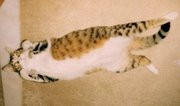
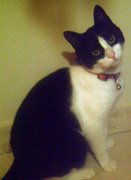
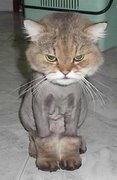
HERE IS MY BEAUTY


SHE IS NOW 17...
POOR BABY - OLD BABY
We adopted MIMO in 1991 and just wanted to say
"thank her".
I am afraid I wouldn't be able to get as attached to a new one.
But she's the most wonderful, loving cat!
She settled right in and stole our hearts.
Thanks for saving her for us.
***AND SHE'S ALWAYS HUNGRY***
We all love her very much...


We shot three different Crazy Poses of her...

28.9.08
♥ BAGS- BE CAREFUL !
Finished your embroidered bags?
Meanwhile let me show you all with the aroma of freshly baked(???)
Black colored Lady's bags...
They can be used
for practical as well as decorative purposes.

Colored Floral designs and
two different embroideries on silk from my gallery.


27.9.08
♥ LOVEBIRDS OR ANGELS?...


* IT'S POSSIBLE *
TRY TO DECORATE YOUR
HOUSES AND WALLS WITH
HOUSES AND WALLS WITH
LOVEBIRDS OR ANGELS...
These are painted by me :))
Lovebirds are for my dear friends' new house.
AND
Hazelnuts are liked and eaten in my house,
this year I did't throw their shells away and
used them on one of my picture.
Did you like my way?
IF YOU SAY "YES"
LOVE YOU ALL!
Subscribe to:
Posts (Atom)